15 JUN 2026
Next-Gen Platforms for Highly Concentrated Biologics Intended for Subcutaneous Delivery
KEY TAKEAWAYS
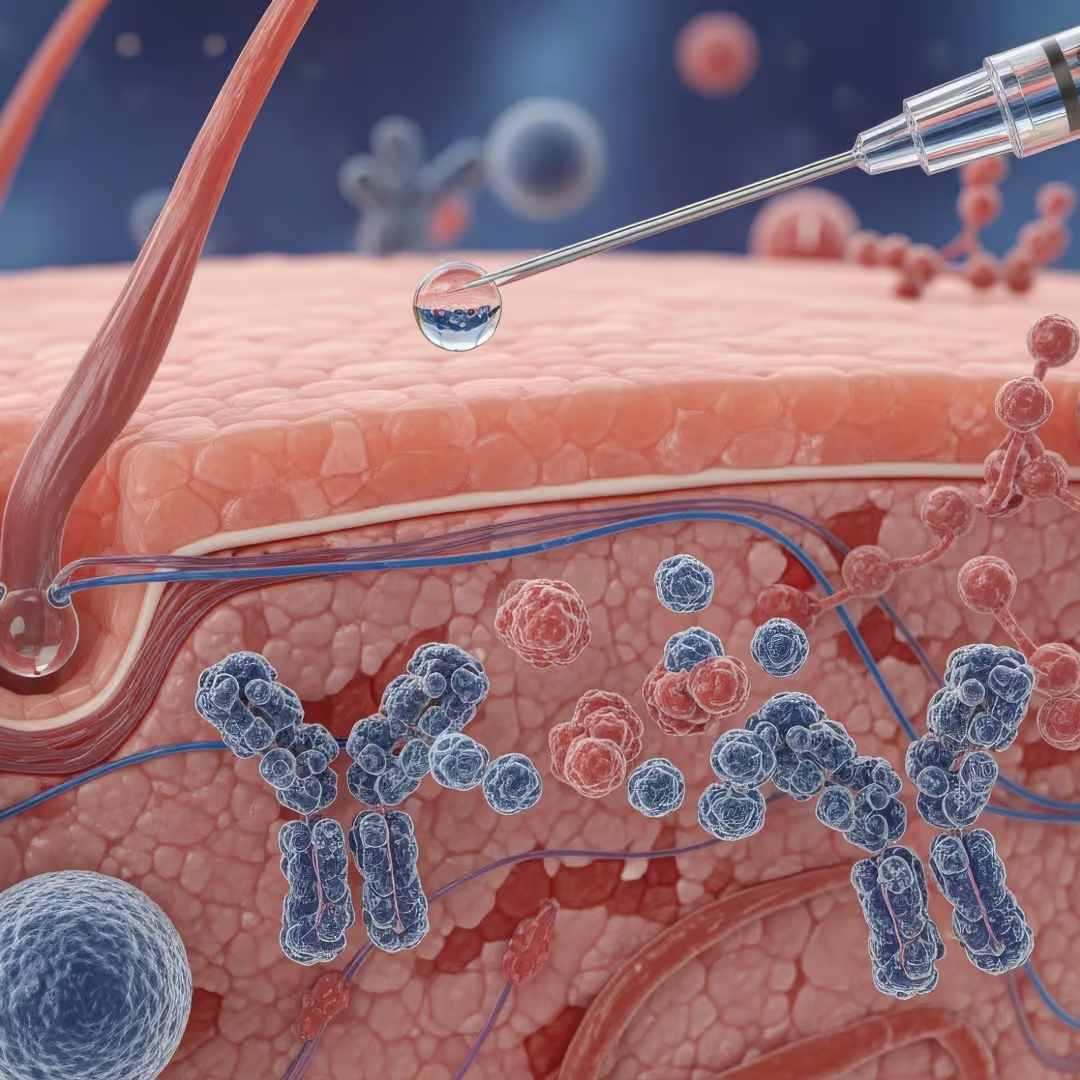
- As highly concentrated biologics are becoming more common subcutaneous (SC) delivery faces mounting formulation challenges around viscosity, volume, and stability.
- Emerging microparticle and suspension-based platforms offer a promising path forward, though clinical validation and regulatory precedent remain to be established.
- Navigating these opportunities requires an integrated development strategy spanning formulation, device, regulatory, and clinical expertise.
- For sponsors weighing these trade-offs, Kymanox is specialized in helping companies create realistic pathways for moving programs forward with the best option.
The Shift from Intravenous to Subcutaneous Biologics
Over the past decade, subcutaneous (SC) injections of biologic drug products have created a paradigm shift in the management of chronic diseases and cancer by offering an alternative to the conventional intravenous (IV) route of administration.1,2 Unlike traditional IV treatments that require frequent visits to the clinic, SC treatments enable patients to self-administer their medications at home, delivering in under a minute a dose that would otherwise require hours to administer by IV. This added convenience supports patient adherence to treatment, improves their quality of life, and broadens overall access to critical therapies.3-5
Patient acceptance of SC-administered biologics is demonstrated with the success of adalimumab (Humira®), etanercept (Enbrel®), rituximab (Rituxan Hycela®), trastuzumab (Herceptin Hylecta™), dupilumab (Dupixent®), and more recently Leqembi®IQLIK™ (lecanemab-irmb) — the first at-home autoinjector option for Alzheimer’s disease maintenance therapy.
Why High-Concentration Formulations Create New Challenges
Given the lower bioavailability of SC administration compared to IV administration, an increase in dose is usually necessary to match IV regimens and meet efficacy requirements.6 This dose increase creates formulation challenges. Specifically, high protein concentrations drive strong protein-protein interactions that can lead to self-association, clustering, and network-like structures that increase resistance to flow.7,8 This results in a highly viscous solution (generally > 20 cP) that requires increased injection force for SC delivery via vial and syringe, potentially posing challenges for patient administration.9 Additionally, highly concentrated biologics must be carefully monitored for aggregation, which can reduce bioavailability and increase immunogenicity by promoting anti-drug antibody formation.10,11
Mitigation strategies for high viscosity protein formulations include the addition of excipients, such as salts and certain amino acids (e.g., arginine) that can reduce electrostatic attraction and hydrophobic self-association. Yet, the impact of these excipients is limited to modulating electrostatic and solvation effects and does not fully address the intrinsic self-association tendencies of the protein. The addition of surfactants into the formulation (e.g., Polysorbate 20 or Polysorbate 80) can be effective in mitigating the risk of interfacial aggregation; however, these excipients provide only a limited effect on bulk aggregation (caused by protein-protein interactions) and are susceptible to degradation.12 Another approach to address this issue is to increase the dosing volume. Technologies, like recombinant human hyaluronidase (rHuPH20) in VYVGART® Hytrulo (efgartigimod alfa and hyaluronidase-qvfc), facilitate larger-volume SC injections (>5 mL) by temporarily breaking down hyaluronic acid in the subcutaneous space and by acting as an agent to increase tissue permeability. Although effective, these formulations exceed the preferred dosing volume for patients of ≤ 3 mL.13,14
Emerging Platforms for High-Concentration SC Delivery
While traditional formulation strategies attempt to manage viscosity and stability within aqueous systems, next-generation platforms seek to change the physical state of the biologic altogether, converting it from a solution to a particle suspension. Recent technologies convert protein solutions into microparticles, nanoclusters, or suspensions, so the dominant interactions shift from protein-protein contacts in solution to particle-particle contacts. Examples of these next-generation concentration platforms are Hypercon™, XeriJect™, Microglassification™, and Room Temperature Aerosol Dehydration (RTAD). These processes can generally be described as atomizing aqueous protein solutions into fine droplets, gently dehydrating them at low temperature into smooth, dense, spherical microparticles, then suspending them in a low-viscosity carrier (often non-aqueous to limit the viscosity penalty of very high protein loading).15,16 The result is a formulation at a protein concentration near 400–600 mg/mL and a viscosity ≤ 20 cP, facilitating SC injections at ≤ 2 mL volumes. The SnapShot™ platform incorporates a proprietary amphiphilic copolymer during spray-drying to further protect against interfacial denaturation/aggregation, allowing even higher concentrations of > 600 mg/mL. The protein microparticles from these platforms redissolve into functional monomers upon reaching the SC space, and have shown equivalent efficacy and safety as traditionally formulated SC biologics in animal studies.17-19
Key technical details of these platforms, as well as partnership with leading pharma and biotech companies, are summarized in Table 1 below. In addition to their benefits to patient usability, the microparticle suspensions also provide supply chain, storage, and distribution benefits. The non-aqueous carrier significantly enhances physical and chemical stability compared to traditional aqueous high-concentration solutions, enabling room-temperature storage and reducing or eliminating cold-chain requirements.16,20
Pharma and biotech confidence in these platforms is evidenced by their acquisitions and partnerships. For example, within the past year, Halozyme acquired Hypercon™ and SnapShot™ technologies. Also in April 2026, Halozyme announced a global exclusive collaboration and license agreement with Vertex Pharmaceuticals, granting Vertex rights to use its Hypercon™ microparticle technology for up to three drug targets.21 Both companies highlighted the potential of the technology to improve patient access and enable next-generation therapies for serious diseases.
Table 1. Comparison of Next-Generation Platforms for High-Concentration SC Biologic Delivery.
| PLATFORM | DEVELOPER (CURRENT STATUS) | KEY TECHNICAL FEATURE | PRIMARY FORMULATION APPROACH | NOTABLE ADVANTAGES | SELECTED INDUSTRY INTEREST/ PARTNERSHIPS |
|---|---|---|---|---|---|
| SnapShot™ | Surf Bio (acquired by Halozyme, Jan 2026) | Polymer-enabled ultra-concentrated formulation | Spray drying with proprietary amphiphilic polyacrylamide-based copolymer excipient | Rapid, scalable using standard manufacturing; no reconstitution required; high achievable concentrations | Acquired by Halozyme ($300M upfront + milestones); multiple pre-acquisition collaborations with multinational pharma |
| Hypercon™ | Elektrofi (acquired by Halozyme, late 2025) | Microparticle suspension of biologics | Gentle low-temperature dehydration into dense spherical microparticles suspended in low-viscosity carrier | 400–500 mg/mL (4–5× standard aqueous); potential room-temperature stability; compatible with standard autoinjectors/prefilled syringes | Acquired by Halozyme ($750M upfront + milestones); prior partnerships with Janssen (J&J), Eli Lilly, argenx; post-acquisition Vertex collaboration |
| XeriJect™ | Xeris Biopharma | Viscoelastic spray-dried suspension | Spray drying followed by suspension in non-aqueous carrier (e.g., triglycerides) | 400 mg/mL with short injection times (<30 sec, ≤2 mL); long-term stability (2–8°C with room-temp potential) | Active collaborations and license agreements with multiple top biopharma companies (including Amgen, Regeneron); advancing to GMP and first-in-human studies |
| Microglassification™ | Lindy Biosciences | Dense protein particle suspension | Ambient-temperature solvent-extraction drying to form amorphous microbeads | Gentle (no heat stress); rapid, continuous, scalable process; stability comparable or better than lyophilization | Exclusive global licensing and strategic collaboration with Novartis (Aug 2024) |
| RTAD | Inaedis | Suspension-based ultra-concentrated formulations | Room-temperature aerosol dehydration | Thermostable powders; scalable, continuous, cGMP-compatible process; preserves protein integrity | DoD SBIR Phase I award (2025) for medical countermeasures; limited large-pharma licensing deals announced to date |
All information drawn from peer-reviewed literature, company announcements, and publicly verified partnership disclosures.
Development and Regulatory Considerations
Despite the growing interest and excitement surrounding these next-gen platform technologies for SC biologics delivery, significant development and regulatory challenges remain. Scale-up of high concentration platforms can present challenges with complexity and throughput given they require specialized spray-drying and atomization equipment and demand rigorous GMP controls to ensure product critical quality attributes and microbial control. Additionally, clinical studies have not yet been conducted to demonstrate comparable safety, immunogenicity, or bioavailability of high concentration formulations generated by these platforms versus established biologic formulations.
Given their lack of clinical precedent, the next-gen platforms of microparticle suspensions may require extended development timelines for BLA marketing approval as sponsors must provide comprehensive nonclinical (toxicology), clinical, analytical, and quality data to prove the platform does not alter the safety or efficacy profile of the drug. This represents a trade-off for sponsors. Greater regulatory complexity and potentially extended timelines may be worthwhile if patients can be given the superior user experience.
Building a Strategy for Next-Generation Biologics
At Kymanox, we specialize in navigating these complexities. Our integrated team of regulatory, clinical, CMC, human factors, device, and program management experts and consultants work with sponsors to create a tailored, end-to-end roadmap that turns conceptual interest in next-gen high-concentration biologics platforms into a clear, de-risked path toward an approved combination product for SC delivery.
Frequently Asked Question
What are next-generation platforms for high-concentration biologics?
Next-generation platforms for high-concentration biologics use technologies such as microparticle suspensions, spray drying, and aerosol dehydration to reduce viscosity and improve stability.
By changing the physical state of the biologic from a traditional solution to a particle-based formulation, these approaches may enable larger doses to be delivered through low-volume subcutaneous injections while improving patient convenience and expanding access to at-home treatment.
References
- Bittner B, Richter W, Schmidt J. Subcutaneous Administration of Biotherapeutics: An Overview of Current Challenges and Opportunities. Biodrugs. 2018;32(5):425-440. doi:10.1007/s40259-018-0295-0
- Bruin G, Nolan R, Amendola S, et al. An industry perspective on clinical development and regulatory strategies for subcutaneously administered high-dose biologics. J Control Release. 2025;386:114156. doi:10.1016/j.jconrel.2025.114156
- Epstein RS. Payer Perspectives on Intravenous versus Subcutaneous Administration of Drugs. Clinicoecon Outcomes Res. 2021;13:801-807. doi:10.2147/CEOR.S317687
- Overton PM, Shalet N, Somers F, Allen JA. Patient Preferences for Subcutaneous versus Intravenous Administration of Treatment for Chronic Immune System Disorders: A Systematic Review. Patient preference and adherence. 2021;15:811-834. doi:10.2147/PPA.S303279
- Aguiar-Ibáñez R, Fotheringham I, Mittal L, Sillah A, Pathak S. Differences Between Intravenous and Subcutaneous Modes of Administration in Oncology from the Patient, Healthcare Provider, and Healthcare System Perspectives: A Systematic Review. Advances in therapy. 2024;41(12):4396-4417. doi:10.1007/s12325-024-02985-9
- Ait-Oudhia S, Wang Y-M, Dosne A-G, et al. Challenging the Norm: A Multidisciplinary Perspective on Intravenous to Subcutaneous Bridging Strategies for Biologics. Clinical pharmacology and therapeutics. 2024;115(3):412-421. doi:10.1002/cpt.3133
- Tomar DS, Kumar S, Singh SK, Goswami S, Li L. Molecular basis of high viscosity in concentrated antibody solutions: Strategies for high concentration drug product development. mAbs. 2016;8(2):216-228. doi:10.1080/19420862.2015.1128606
- Mijangos LRR, Harding SE, Darton NJ. Developing high-concentration monoclonal antibody formulations for subcutaneous administration to improve patient treatment. Biophysical reviews. 2025;17(4):1013-1031. doi:10.1007/s12551-025-01346-2
- Hu G, Milewski M, Krishnamachari Y, et al. High concentration subcutaneous biological drug products: challenges and advancements. Advanced drug delivery reviews. 2026;232:115793. doi:10.1016/j.addr.2026.115793
- Jarvi NL, Balu-Iyer SV. Immunogenicity Challenges Associated with Subcutaneous Delivery of Therapeutic Proteins. Biodrugs. 2021;35(2):125-146. doi:10.1007/s40259-020-00465-4
- Zarzar J, Khan T, Bhagawati M, Weiche B, Sydow-Andersen J, Alavattam S. High concentration formulation developability approaches and considerations. mAbs. 2023;15(1):2211185. doi:10.1080/19420862.2023.2211185
- Khan TA, Mahler H-C, Kishore RSK. Key interactions of surfactants in therapeutic protein formulations: A review. European journal of pharmaceutics and biopharmaceutics : official journal of Arbeitsgemeinschaft fur Pharmazeutische Verfahrenstechnik e.V. 2015;97(Pt A):60-67. doi:10.1016/j.ejpb.2015.09.016
- Usach I, Martinez R, Festini T, Peris J-E. Subcutaneous Injection of Drugs: Literature Review of Factors Influencing Pain Sensation at the Injection Site. Advances in therapy. 2019;36(11):2986-2996. doi:10.1007/s12325-019-01101-6
- Badkar AV, Gandhi RB, Davis SP, LaBarre MJ. Subcutaneous Delivery of High-Dose/Volume Biologics: Current Status and Prospect for Future Advancements. Drug Design, Development and Therapy. 2021;15:159-170. doi:10.2147/DDDT.S287323
- Poozesh S, Mezhericher M, Pan Z, Chaudhary U, Manikwar P, Stone HA. Rapid Room-Temperature Aerosol Dehydration Versus Spray Drying: A Novel Paradigm in Biopharmaceutical Drying Technologies. Journal of Pharmaceutical Sciences. 2024;113(4):974-981. doi:10.1016/j.xphs.2023.10.003
- Chandrababu KB, Kannan A, Savage JR, et al. Stability Comparison Between Microglassification and Lyophilization Using a Monoclonal Antibody. Journal of Pharmaceutical Sciences. 2024;113(4):1054-1060. doi:10.1016/j.xphs.2023.10.021
- Klich JH, Kasse CM, Mann JL, et al. Stable High-Concentration Monoclonal Antibody Formulations Enabled by an Amphiphilic Copolymer Excipient. Advanced therapeutics. 2023;6(1). doi:10.1002/adtp.202200102
- Shadbar S, Liu L, Tang Y, et al. S.C. delivery of ultra-high concentration (up to 500 mg/mL) protein microparticle suspensions: pharmacokinetics, efficacy, biodistribution, and immunogenicity. Drug delivery and translational research. 2026;16(1):202-215. doi:10.1007/s13346-025-01856-2
- Fitch R, Toomer G. Toxicology Assessment of High Concentration XeriJect® Trastuzumab Biosimilar Administered Subcutaneous in Cynomolgus Non-Human Primates. Accessed May 6, 2026. https://xerispharma.com/static-files/17e09124-de86-4909-a887-4a32fb47eee8
- Jons CK, Prossnitz AN, Eckman N, Dong C, Utz A, Appel EA. Glassy Surfactants Enable Ultra-High Concentration Biologic Therapeutics. bioRxiv. 2024:2024.09.09.612104. doi:10.1101/2024.09.09.612104
- Halozyme Therapeutics, Inc. Halozyme Announces Global Collaboration and License Agreement with Vertex Pharmaceuticals for Hypercon™ Technology. PR Newswire. 2026. Published April 7, 2026. Accessed May 6, 2026. https://www.prnewswire.com/news-releases/halozyme-announces-global-collaboration-and-license-agreement-with-vertex-pharmaceuticals-for-hypercon-technology-302735490.html